Why Smart People Believe Pseudoscience (And What's Actually Going On in Your Brain)

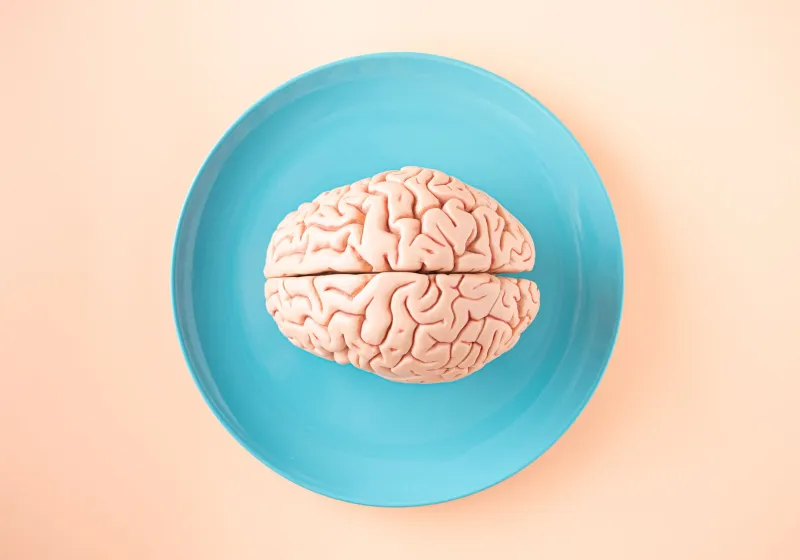
Photo: Photograph by Mike Peel (www.mikepeel.net)., CC BY-SA 4.0, via Wikimedia Commons
Let's get something uncomfortable out of the way first: you have believed something scientifically wrong. So have I. So has every researcher, doctor, and science communicator you've ever admired.
This isn't an insult — it's a starting point. Because the moment we assume that misinformation is someone else's problem, something only less educated people fall for, we become significantly more vulnerable to it. And in 2024, with health claims ricocheting across TikTok and Facebook at the speed of a share button, that vulnerability has real consequences.
So let's actually look at the neuroscience and cognitive psychology behind why your brain — a genuinely impressive biological computer — is still surprisingly bad at distinguishing real science from a convincing imitation.
Your Brain Is Built for Efficiency, Not Accuracy
The human brain processes an estimated 11 million bits of information per second through the senses. It consciously handles maybe 50. The gap between those two numbers is bridged by cognitive shortcuts called heuristics — rapid, automatic rules of thumb that let you navigate the world without deliberating over every single decision.
Most of the time, heuristics are genuinely useful. But they were shaped by an evolutionary environment very different from one where a 30-second video can reach 40 million people before anyone fact-checks it.
One of the most relevant heuristics here is the fluency effect: information that is easy to process feels more true. A claim stated confidently, in plain language, with a before-and-after photo, registers as more credible than a nuanced, hedged explanation full of caveats — even if the nuanced version is the accurate one. Science, by its nature, is full of caveats. Pseudoscience rarely is.
Confirmation Bias: The Invisible Editor in Your Head
If you've heard of one cognitive bias, it's probably confirmation bias — the tendency to seek out, favor, and remember information that confirms what you already believe. But understanding it conceptually and actually catching it in yourself are very different things.
Here's a concrete example. Imagine you've been using a particular supplement for a few months and you feel better. You're now primed to notice every article that supports the supplement's benefits and to skim past or dismiss studies that don't. You're not being dishonest. Your brain is doing exactly what it was designed to do: protect the internal model of the world you've already built.
The problem is that this same mechanism makes it really hard to update beliefs when new evidence comes in — especially when the belief is tied to something personal, like your health, your identity, or a choice you've already made publicly.
The Backfire Effect: When Corrections Make Things Worse
This one is particularly unsettling. Research has shown that in some circumstances, presenting people with factual corrections to their false beliefs doesn't just fail to change their minds — it can actually strengthen the original belief. This is called the backfire effect.
The mechanism involves threat response. When a belief is closely tied to someone's identity or worldview, a direct contradiction feels less like a factual update and more like a personal attack. The brain's defensive systems activate, and the person doubles down.
This is why "just show them the studies" is often an ineffective strategy for changing minds about scientific misinformation. It's not that the studies don't matter — they do. It's that the delivery and framing of information affects whether it's processed as useful data or as a threat to be defended against.
Recent research has complicated the backfire effect somewhat — it appears less universal than initially thought — but the core insight holds: emotional context shapes how factual information is received.
Why Source Credibility Is Harder to Assess Than You Think
We're often told to "check your sources," as if this is a simple fix. But evaluating source credibility is actually a surprisingly complex cognitive task, and most of us aren't very good at it.
Studies have found that people — including college students trained in research — frequently mistake a website's visual design for an indicator of its credibility. A professionally formatted article on a slick website registers as more authoritative than the same content on a plain-looking page, regardless of the actual quality of the evidence cited.
Social proof compounds this. A claim that's been shared 200,000 times feels more credible than one that hasn't — even though popularity has zero relationship to accuracy. Our brains interpret widespread agreement as a signal of truth, which made reasonable sense when "widespread agreement" meant your entire community had reached consensus over time. It makes much less sense when an algorithm amplifies content based on engagement metrics.
The Expertise Paradox
Here's a twist: higher education and stronger analytical ability don't necessarily protect against all forms of motivated reasoning. In fact, research by psychologist Dan Kahan has found that people with stronger quantitative reasoning skills are better at finding reasons to believe whatever they were already inclined to believe — a phenomenon he calls identity-protective cognition.
Smarter people, in other words, are better at rationalizing. They construct more sophisticated justifications for conclusions they've already reached emotionally. This is humbling, and it's an important argument against intellectual arrogance when it comes to evaluating our own beliefs.
So What Can You Actually Do?
None of this is meant to make you feel hopeless about your ability to reason well. These are tendencies, not destiny. Here are some evidence-backed strategies for genuinely improving how you evaluate scientific claims:
Slow down on things that feel immediately obvious. Strong emotional resonance — outrage, excitement, vindication — is a signal to increase scrutiny, not decrease it. If a headline makes you want to immediately share it, that's exactly when to pause.
Practice lateral reading. This is a technique used by professional fact-checkers: instead of reading deeply into a source to evaluate it, open new tabs and look at what other sources say about that source. It's faster and more reliable than trying to assess credibility from the inside.
Distinguish between scientific consensus and individual studies. A single study showing X does not mean "science proves X." Science is a process of accumulating and weighing evidence over time. Consensus — what the majority of relevant experts conclude after reviewing the totality of evidence — is much more meaningful than any single paper.
Get comfortable with uncertainty. Pseudoscience often thrives by offering certainty that real science can't provide. Learning to sit with "we don't fully know yet" as a legitimate and honest answer is one of the most scientifically literate things you can do.
Separate the messenger from the message. A claim isn't wrong because an annoying person made it, and it isn't right because a credentialed expert did. Evaluate the evidence, not just the source.
The Goal Isn't Cynicism
Building better critical thinking skills isn't about distrusting everything — that's just a different kind of cognitive failure. The goal is calibrated skepticism: proportioning your confidence in a claim to the quality and quantity of evidence supporting it.
Science is the most reliable method humans have ever developed for understanding how the world actually works. Protecting your ability to engage with it honestly — by understanding the ways your own brain can mislead you — is one of the most genuinely useful things you can do with a few minutes of reading.
And hey, the fact that you're here reading this? That's already a good sign.