The Science Behind That 'Gut Feeling': Meet the Nervous System You Didn't Know You Had
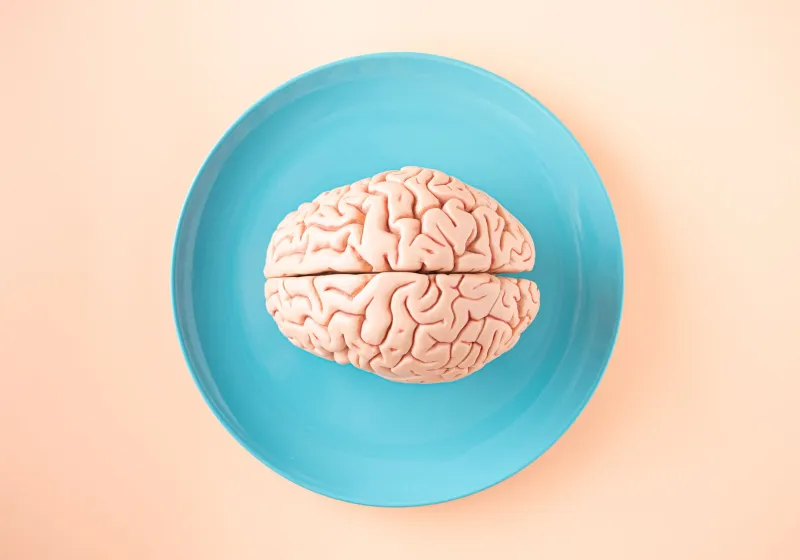
You've probably said it before — "I just had a gut feeling about it." Maybe it was a hunch that a business deal felt off, or a sudden certainty that you'd aced a tough exam. We throw the phrase around casually, but here's the wild part: that gut feeling is genuinely biological. There's an entire nervous system living in your digestive tract, and scientists are only beginning to understand just how much influence it has over the way we think, feel, and even learn.
Welcome to neurogastroenterology — one of the most fascinating and fast-growing corners of modern science.
You've Got More Than One Brain (Sort Of)
Let's start with the basics. Most of us learned in school that the brain and spinal cord make up the central nervous system — the command center of the body. But there's a lesser-known player called the enteric nervous system (ENS), a complex web of roughly 100 to 500 million neurons embedded in the lining of your gastrointestinal tract, stretching from your esophagus all the way to your colon.
That's more neurons than your spinal cord contains. Let that sink in for a second.
The ENS is capable of operating independently from the brain — it can regulate digestion, respond to environmental changes, and even process sensory information all on its own. Scientists and science writers have started calling it the "second brain," and while it doesn't write poetry or solve algebra problems, it is constantly gathering data and communicating back to your central nervous system in ways that genuinely shape how you feel and make decisions.
The Highway Between Your Head and Your Stomach
The communication line connecting your gut and your brain is called the gut-brain axis, and its main highway is the vagus nerve — one of the longest nerves in the human body. What's surprising to most people is the direction of traffic on that highway. About 80 to 90 percent of the signals traveling along the vagus nerve are heading upward — from gut to brain — not the other way around.
In other words, your gut is talking to your brain far more than your brain is talking to your gut.
Those signals influence everything from mood and stress responses to memory consolidation and emotional processing. When researchers at institutions like Caltech and Johns Hopkins have studied the gut-brain axis, they've found that gut microbes — the trillions of bacteria living in your digestive system — can actually produce neurotransmitters like serotonin, dopamine, and GABA. In fact, around 90 percent of the body's serotonin (yes, the "feel-good" chemical most people associate with antidepressants) is produced in the gut.
So What Does This Have to Do With Intuition?
Here's where it gets really interesting for anyone who's ever had a hunch that turned out to be right.
Intuition isn't magic — it's pattern recognition happening below your conscious awareness. Your brain is constantly processing enormous amounts of sensory data, and a lot of that data comes from your body, including your gut. When something feels "off" about a situation, it might be because your enteric nervous system has picked up on subtle environmental cues — a slight shift in tone, a pattern that doesn't quite fit — and is sending those signals upward before your conscious mind has had time to catch up.
Researchers refer to this as interoception: the brain's ability to sense and interpret signals from inside the body. People with stronger interoceptive awareness — meaning they're better at "reading" their own bodily states — tend to make more accurate intuitive decisions in uncertain situations. A 2016 study published in Psychological Science found that traders in London's financial markets who scored higher on interoception tests made more profitable decisions. Their gut, quite literally, was giving them useful information.
Why This Matters for How You Learn Science
Okay, so what does all of this mean for students and curious minds trying to wrap their heads around complex scientific concepts?
A lot, actually.
When you're struggling to understand something — say, the mechanics of quantum entanglement or the thermodynamics of a heat engine — your body's stress response kicks in. Cortisol rises, digestion slows, and the gut-brain axis starts sending signals that your brain interprets as discomfort or anxiety. That's partly why difficult material can feel almost physically unpleasant.
But the reverse is also true. That "aha" moment when a concept finally clicks? There's a physiological component to that too. Many learners report a physical sensation — a kind of release or warmth — when understanding arrives. That's not coincidence. It's your nervous systems (both of them) responding to the resolution of cognitive tension.
Understanding this can actually change how you approach studying. Practices that calm the gut-brain axis — like deep breathing, regular meals, and even light physical movement — can meaningfully improve your ability to absorb and retain new information. The gut isn't just along for the ride when you're learning; it's an active participant.
The Science Is Still Evolving — And That's the Point
Neurogastroenterology is a relatively young field, and researchers are the first to admit there's a lot we still don't know. The relationship between gut microbiome diversity and cognitive function, for example, is an area of intense ongoing research. Studies in mice have shown that altering gut bacteria can change anxiety levels and even learning behavior — but translating those findings to humans is complicated, and the science isn't settled.
That uncertainty is actually one of the most exciting things about this field. It's a reminder that science is a living, breathing process — not a fixed set of facts handed down from on high. The gut-brain connection challenges old assumptions about where thinking happens and what counts as "biological" versus "psychological."
For students and lifelong learners, that's an inspiring message: the boundaries of what we understand are always shifting, and sometimes the most important discoveries start with a feeling you can't quite explain.
Listen to Your Gut — Literally
Next time you get that inexplicable sense that something is right — or very, very wrong — remember that your body is running sophisticated biological software you didn't even know existed. Your enteric nervous system is processing the world alongside your brain, sending signals up through the vagus nerve, and shaping your perceptions in ways that science is only beginning to map.
Gut feelings aren't superstition. They're neuroscience in action.
And the more we learn about the second brain, the clearer it becomes that understanding science isn't just an intellectual exercise — it's a whole-body experience.