Scrolling Toward Science: How Short-Form Video Is Quietly Reshaping the Way Young Americans Think About STEM
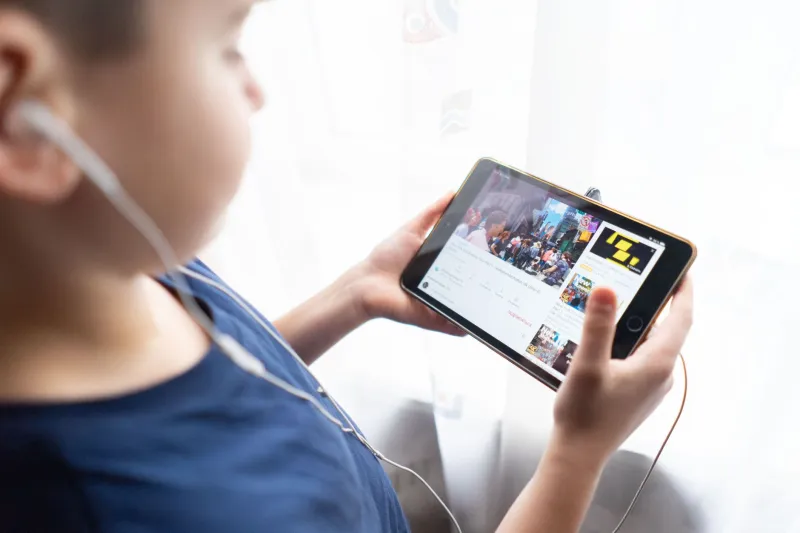
Science Used to Live in Classrooms. Now It Lives in Your Feed.
Somewhere between a cat video and a cooking hack, millions of American teenagers are watching someone explain black holes, dissect the chemistry of sunscreen, or demonstrate why non-Newtonian fluids behave the way they do. Nobody assigned it. Nobody graded it. They just... kept watching.
This is the quiet science education revolution happening inside social media platforms, and it's more complicated — and more interesting — than either its biggest fans or harshest critics tend to admit.
Short-form science content has exploded over the past five years. Creators like Mark Rober, Veritasium's Derek Muller, and a growing ecosystem of anonymous chemistry teachers and biology enthusiasts have collectively racked up billions of views explaining scientific concepts in formats that would make a traditional curriculum coordinator nervous. Fast cuts. Dramatic music. Hooks designed to grab attention in under two seconds. And yet — something is clearly resonating.
The Curiosity Trigger
To understand why this format works at all, it helps to think about what actually initiates learning in the brain. Neuroscientists have long known that curiosity isn't just a personality trait — it's a neurochemical state. When the brain encounters an information gap (something it doesn't know but suddenly wants to), it releases dopamine in a way that motivates information-seeking behavior. You feel the pull to find out.
Short-form science videos are, almost accidentally, extremely good at creating information gaps. A strong hook — "You've been breathing wrong your entire life" or "This is why your microwave has that spinning plate" — doesn't just grab attention. It creates a small but genuine state of intellectual curiosity that primes the viewer to absorb what comes next.
"The format forces creators to lead with the interesting part," says one middle school science teacher from Ohio who has integrated creator-style video production into her classroom projects. "Traditional lessons often build up to the interesting part. TikTok science has to start there."
That structural difference matters more than it might seem. Research on attention and memory encoding suggests that emotional and curiosity-driven states at the beginning of a learning experience improve retention of the content that follows. By front-loading the fascinating outcome or surprising fact, short-form science content may actually be doing something pedagogically smart — even if unintentionally.
Accessibility as a Feature
There's another dimension to this story that gets less attention: equity.
For students in under-resourced school districts — a reality for a significant portion of American kids, particularly in rural areas and lower-income urban communities — social media has become an unexpected equalizer. A teenager in rural Mississippi with a smartphone and a TikTok account has access to the same explanation of quantum entanglement as a student at a well-funded prep school in Connecticut. That's not nothing.
Several researchers studying educational equity have noted that informal science learning through digital platforms is particularly valuable for students who don't see themselves reflected in traditional STEM spaces. When a Latina creator explains organic chemistry in casual Spanish-English code-switching, or a Black physicist breaks down relativity while cracking jokes, it sends a signal about who science belongs to that textbooks have historically failed to send.
The Oversimplification Trap
None of this means the picture is uniformly rosy. The same format constraints that make short-form science engaging also create real problems.
Sixty seconds is not enough time to explain the nuance of a scientific study, the limitations of a model, or the difference between correlation and causation. And yet those distinctions are arguably the most important things science education is supposed to teach. A video confidently stating that "scientists discovered X" — without mentioning sample sizes, replication status, or peer review — isn't teaching science. It's teaching science-flavored confidence, which can be more dangerous than ignorance.
Misinformation spreads through exactly this mechanism. A well-produced video with accurate-sounding narration and impressive visuals can convey false or misleading scientific claims with the same apparent authority as a legitimate explainer. And the algorithmic structure of most platforms prioritizes engagement over accuracy — meaning the most emotionally compelling version of a claim, true or not, tends to win.
Educators working at the intersection of media literacy and science instruction have started calling this the "credibility illusion" — the tendency for polished presentation to substitute for epistemic quality in the minds of viewers who haven't been taught to distinguish the two.
What Actually Leads to Deeper Learning?
So which formats are genuinely educational versus purely entertaining? The research offers some useful signals.
Videos that model scientific thinking — showing uncertainty, revising conclusions, acknowledging what isn't known — appear to produce better conceptual understanding than videos that simply deliver conclusions. A creator who says "here's what we thought, here's what the new data shows, and here's why this is still an open question" is teaching the process of science, not just the product.
Interactivity also matters. Formats that prompt viewers to predict an outcome before revealing it — a technique used effectively by channels like Veritasium — activate the same prediction-error mechanisms that make hands-on experiments so effective. You form a mental model, your model gets tested, and the mismatch (if there is one) drives deeper encoding.
Longer-form follow-up behavior is another positive signal. When a short video prompts a viewer to search for more information, read a Wikipedia article, or watch a longer documentary, it has functioned as a gateway rather than a destination — and that's arguably the best a 60-second video can realistically do.
Teaching the Teachers to Meet Students Where They Are
Perhaps the most interesting development in this space is happening in classrooms themselves. A growing number of American educators are incorporating short-form video analysis directly into science instruction — not just as supplementary material, but as a primary text to be critically examined.
Students are asked to fact-check viral science claims, identify missing context, evaluate sources, and compare what a TikTok video says against what a peer-reviewed paper actually shows. This approach turns the platform's weaknesses into pedagogical strengths: the very features that make social media science unreliable become opportunities to practice scientific skepticism.
That might be the most honest answer to the question of whether TikTok is making Gen Z better at science: it depends entirely on whether anyone is teaching them how to watch it.
The Bigger Picture
A generation that finds science interesting — even if their first encounter with it comes through a 45-second video with trending audio — is a generation that's more likely to take a science class, pursue a STEM career, or simply make better-informed decisions as citizens and voters. The pipeline starts somewhere.
Short-form platforms aren't going to replace rigorous science education. But they might be doing something that rigorous science education has struggled to do for decades: making millions of young Americans feel like science is for them. That's worth taking seriously.